
On-Page SEO
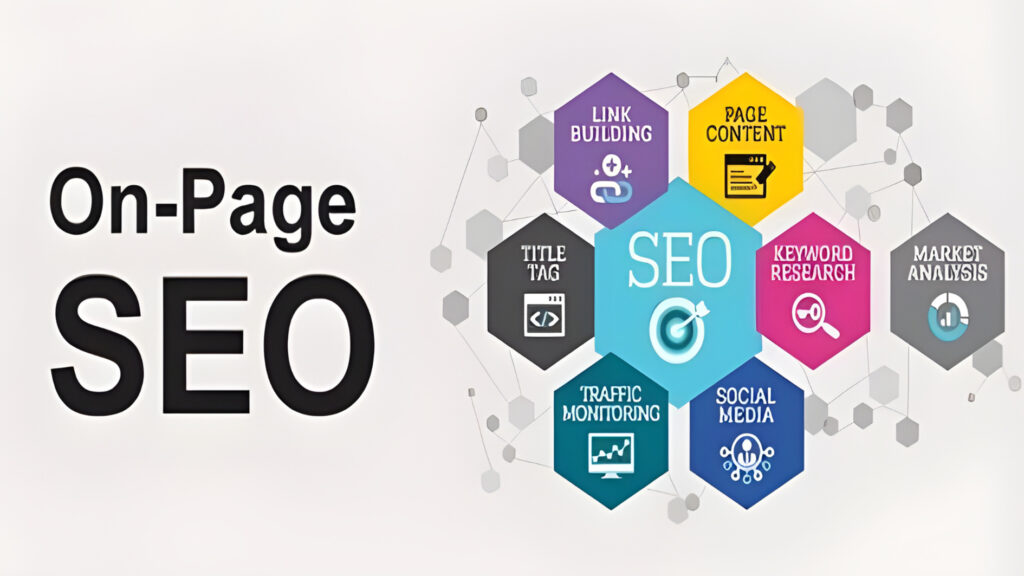
On-Page SEO refers to the practice of optimizing individual web pages to improve their search engine rankings and attract relevant organic traffic. It focuses on both content and HTML source code elements that help search engines understand a page’s relevance, quality, and user value.
A well-executed on-page SEO strategy enhances visibility, improves user experience, and strengthens overall website performance.
How On-Page SEO Works
When someone searches for something, search engines:
Crawl websites using bots
Analyze keywords and topic relevance
Check content quality
Evaluate user experience
Rank pages accordingly
On-Page SEO helps your page clearly communicate its topic and value.
Core Elements of On-Page SEO
1. Keyword Research & Optimization
Keywords are the foundation of On-Page SEO.
Types of Keywords:
Short-tail (SEO services)
Long-tail (best SEO services in Kannur)
Informational (what is SEO)
Transactional (hire SEO expert)
Where to Place Keywords:
Title tag
First 100 words
Headings (H1, H2, H3)
URL
Meta description
Image ALT text
2. Title Tag Optimization
The title tag is one of the strongest ranking factors.
Best Practices:
Under 60 characters
Include primary keyword
Make it clickable and clear
Add year if relevant (2026 Guide)
3. Meta Description
Meta description does not directly affect ranking but improves click-through rate (CTR).
Best Practices:
150–160 characters
Include main keyword
Add call-to-action
4. Header Tag Structure (H1, H2, H3)
Headers improve readability and SEO clarity.
H1 → Main title (only one per page)
H2 → Main sections
H3 → Subsections
Search engines use headings to understand content structure.
5. High-Quality Content
Content is the heart of On-Page SEO.
Your content must be:
Original
Helpful
In-depth
Well-structured
Easy to read
Content Tips:
Answer user questions
Use bullet points
Add examples
Include statistics if possible
Write for humans first, search engines second
Long-form content (1000+ words) often performs better when valuable.
6. Internal Linking
Internal links connect pages within your website.
Benefits:
Helps search engines crawl your site
Distributes page authority
Keeps users longer on site
7. Image Optimization
Images also contribute to SEO.
Optimize by:
Using descriptive file names
Adding ALT text
Compressing images
Using modern formats (WebP)
8. Content Readability
Make your content:
Simple
Short paragraphs
Clear sentences
Proper spacing
Easy vocabulary
Readable content performs better.
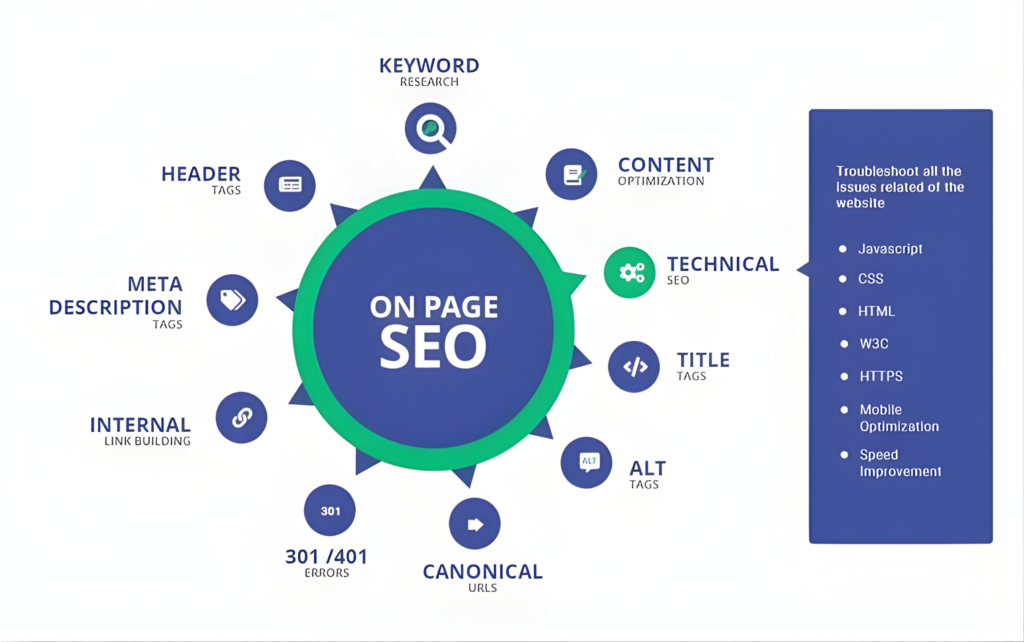
On-Page SEO plays a critical role in determining how effectively a website communicates its value to both users and search engines. It involves the strategic optimization of all elements within a webpage, including high-quality and relevant content, proper keyword research and placement, optimized title tags and meta descriptions, clear heading structures, SEO-friendly URLs, internal linking, image optimization, mobile responsiveness, and fast page loading speeds. When these elements work together, they improve crawlability, indexability, and overall user experience.
Beyond rankings, strong on-page SEO helps establish topical relevance and authority by aligning content with user search intent. Well-structured and informative pages reduce bounce rates, increase dwell time, and encourage user interaction, all of which send positive signals to search engines. Additionally, on-page optimization ensures accessibility and usability across devices, making content easier to navigate and understand.
In conclusion, on-page SEO is not a one-time task but an ongoing process that requires regular updates, performance monitoring, and content improvements. When implemented consistently and strategically, it forms the foundation of a successful digital presence, supporting higher search engine rankings, sustained organic traffic growth, and improved conversions over the long term.